
Sheikh Hasina death sentence : South Asia woke up to shocking news when former Bangladesh Prime Minister Sheikh Hasina was sentenced to death by the International Crimes Tribunal (ICT) in Dhaka. The verdict, announced on Monday, has created intense discussion in Bangladesh, India, and across global political circles. Some people are calling it justice, while others are calling it an act of political revenge.
Hasina, one of the most powerful leaders in Bangladesh’s history, ruled the country for more than 15 years. Today, she stands convicted of crimes against humanity, mainly connected to the violent crackdown on student protests in July–August 2024.
This article explains the entire story in simple Indian English — what happened, why the verdict is important, how Bangladesh is reacting, and what this means for the future of the region.
1. Who Is Sheikh Hasina? A Brief Background
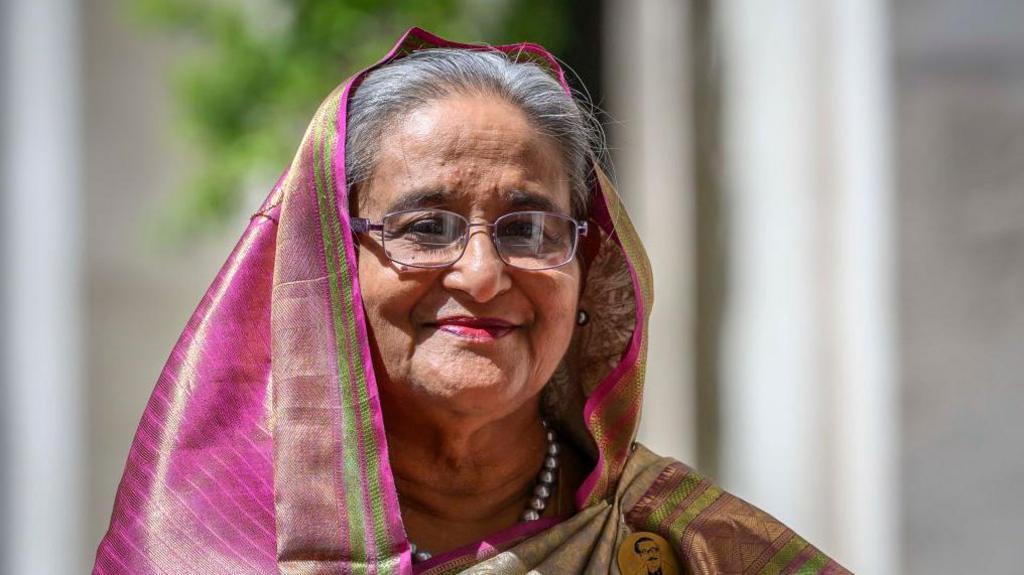
Sheikh Hasina is the daughter of Sheikh Mujibur Rahman, the founding father of Bangladesh. She entered politics at a young age, experienced political exile, and finally became one of the most influential leaders of her country.
Her major political milestones include:
- Serving as Prime Minister for four terms
- Leading the Awami League, one of Bangladesh’s biggest political parties
- Overseeing major development projects
- Strengthening Bangladesh’s economy
- Maintaining close relations with India
For years, she was considered the strongest political figure in Bangladesh. But critics often accused her government of silencing opposition voices, controlling media, and using police forces harshly.
These accusations intensified during the 2024 student protests, which later became the main reason behind her trial.
2. What Happened in 2024? The Student Uprising
In July and August 2024, Bangladesh saw one of the biggest protest movements in its history. Students came out in huge numbers against certain government decisions and alleged misuse of power.
Key issues that triggered the protests:
- Excessive government control over public institutions
- Issues related to job quotas
- Accusations of corruption
- Demands for better governance
- Anger over rising unemployment
The protests were initially peaceful. But within days, clashes started happening between students and security forces. Videos and reports from that time showed:
- Tear gas
- Rubber bullets
- Drone surveillance
- Helicopters used for crowd control
- Allegations of live firing
Human rights groups claimed that more than 1,400 people died during the crackdown and thousands were injured.
Those incidents became the foundation of the case against Sheikh Hasina.
3. Why Was Sheikh Hasina Sentenced to Death?
The International Crimes Tribunal (ICT) charged Hasina with:
• Crimes against humanity
• Ordering excessive force against protesters
• Allowing state forces to commit brutal attacks
• Failing to stop unlawful killings
• Abuse of political power
The court stated that Hasina was the “mastermind” behind the violent actions of the police and security agencies.
Along with her, two others were also convicted:
- Asaduzzaman Khan (former Home Minister) — death sentence
- Chowdhury Abdullah Al-Mamun (former police chief) — 5 years jail (for cooperating)
This verdict was based on hundreds of witness statements, videos, photographs, and investigation reports.
4. Hasina’s Response: “The Trial Was Politically Motivated”
Sheikh Hasina rejected all charges.
She said:
- The tribunal is not legitimate because it was formed by an unelected interim government.
- The verdict is biased, designed only to destroy the Awami League.
- She was not given a fair chance to defend herself.
- The evidence was manipulated for political gain.
From exile, she accused the interim government of running a political agenda to keep her out of power forever.
5. Where Is Sheikh Hasina Now?
Hasina is currently in India, where she arrived after her government fell. She has not publicly disclosed her exact location for security reasons.
Bangladesh has officially requested India to:
➡️ Return Sheikh Hasina under the extradition treaty
However, India has not given a clear statement. Officials say they are “examining the request.”
This puts India in a very delicate diplomatic situation.
6. Can Sheikh Hasina Appeal?
Yes — but only under strict conditions.
To appeal, she must:
- Return to Bangladesh and surrender to the authorities
OR - Be arrested and brought back
She cannot appeal while staying in India. The court has given 60 days to file the appeal, which adds more pressure.
7. Reaction Inside Bangladesh
The verdict has divided Bangladesh.
People supporting the verdict say:
- “No one is above the law.”
- “She should be held responsible for the violence during her rule.”
- “It is justice for the families who lost loved ones.”
People opposing the verdict say:
- “This is political revenge.”
- “The tribunal is controlled by Hasina’s political enemies.”
- “The charges were exaggerated.”
- “The country is entering a dangerous phase.”
Security across Dhaka has been tightened to prevent possible protests or violence.
8. Reaction from the Interim Government
Nobel laureate Muhammad Yunus, who heads the interim government, said:
- This is a step toward justice
- Even powerful leaders cannot escape accountability
- The court followed due process
- Bangladesh must move toward transparent democracy
However, some political experts argue that Yunus’s government is trying to eliminate the Awami League from future elections.
9. What Does This Mean for India?
India is in a tough position because:
1. Hasina has been India’s closest ally for years
She helped India on several security and trade issues.
2. The extradition request is politically sensitive
Sending her back could affect India-Bangladesh relations and trigger political unrest in Bangladesh.
3. Refusing the request may upset the Bangladeshi interim government
Which might impact border cooperation and regional stability.
4. India cannot appear biased
Any action may be interpreted as interference in Bangladeshi politics.
For now, India has chosen to remain neutral and silent.
10. International Response
The global response has mostly been cautious.
- Human rights groups have asked for transparency in the investigation.
- Western countries have expressed concern over the death penalty.
- South Asian nations are watching the situation closely, trying to understand how the political landscape will shift.
No major country has openly supported or opposed the verdict yet.
11. How Will This Affect Bangladesh’s Future?
The verdict may reshape Bangladesh in several ways:
A. Political Landscape
The Awami League, once the strongest party, is now weakened. Many of its leaders are in exile or hiding.
B. Upcoming Elections
The interim government wants to hold elections soon. But Hasina’s supporters say it will not be a fair election without the Awami League.
C. Social Stability
The verdict may create fear, tension, or new protests.
D. Economy
Bangladesh’s economy has already suffered due to political instability. The verdict might delay investments and reform plans.
E. Rule of Law
Some people believe this verdict will strengthen accountability. Others fear it may set a dangerous precedent.
12. Is the Verdict Fair? Two Sides of the Debate
Side 1: “Yes, it is fair.”
Supporters argue:
- The crackdown killed hundreds of young students.
- Hasina used police as a political weapon.
- She ignored basic human rights.
- Leaders should be responsible for their actions.
Side 2: “No, it is political revenge.”
Opponents argue:
- The interim government is anti-Awami League.
- The tribunal was rushed.
- Hasina was not present during the trial.
- Evidence was not examined fairly.
- Political rivals benefited from the verdict.
The truth may lie somewhere in between, and only time will reveal the full picture.
13. What Happens Next? Possible Scenarios
There are three major possibilities:
Scenario 1: India Sends Hasina Back
This would allow her to file an appeal, but it could cause tension in Bangladesh.
Scenario 2: India Rejects Extradition
This may protect Hasina, but could strain diplomatic ties.
Scenario 3: Hasina Seeks Asylum in a Third Country
She may ask for protection in Europe, the Middle East, or the US.
Whichever path she chooses, the political drama is far from over.
14. Final Thoughts
The death sentence of Sheikh Hasina marks a historic turning point for Bangladesh. It is extremely rare for a former prime minister in South Asia to be sentenced to death by a local court.
This case is not just about Hasina. It raises big questions:
- How should governments handle protests?
- How much power should leaders have?
- Is justice possible in politically charged situations?
- Can democracy survive deep political divisions?
For Bangladesh, the future is uncertain. For India, the situation is diplomatically sensitive. And for the people of Bangladesh, this verdict will shape the political atmosphere for many years.
Only one thing is clear:
South Asia is watching closely, and the story of Sheikh Hasina is not over yet
Maruti Dzire Dominates October 2025 Sedan Sales: Aura, Amaze Shine; Verna, City Drop